Dedicated Gluten-Free Zones: Creating Safe Spaces in a Shared Kitchen (2026)

Ever feel like you’re playing a culinary detective in your own kitchen? Sifting through crumbs, scrutinizing spatulas, wondering if that cutting board has seen some things you’d rather not think about? For anyone living gluten-free, especially in a shared kitchen, that feeling is all too real. Your kitchen, the heart of your home, should be a place of joy and delicious creation, not a minefield of potential gluten cross-contamination. That’s why we’re going to talk about creating dedicated GF zones. It’s about building a fortress of fabulousness for your food, ensuring peace of mind, and making every meal a safe, happy experience. This is a critical step in Preventing Gluten Cross-Contamination, and it’s easier than you might think.
Think of it like this: your GF food is a precious treasure. You wouldn’t leave your favorite heirloom in the middle of a busy highway, right? Same goes for your gluten-free ingredients and meals. They need their own special, protected spaces. We’re not talking about a total kitchen overhaul, but rather smart, simple strategies that make a huge difference. Ready to claim your culinary territory? Let’s dive in!
Why Dedicated Zones Are Your New Best Friend
You might be thinking, “Is it really that big of a deal?” Oh, my friend, it absolutely is. For those with Celiac disease or severe gluten sensitivities, even the tiniest crumb can trigger a significant reaction. We’re talking about gluten measured in parts per million (PPM), a level so small it’s practically invisible. That’s why a shared kitchen can be such a challenge. Flour dust can linger in the air. A stray crumb can hide on a countertop. Spoons can get mixed up. It happens. People mean well, but accidents happen when boundaries aren’t clear. Creating dedicated zones removes much of that guesswork and anxiety. It gives you control, confidence, and most importantly, safety.
Plus, it changes your entire cooking vibe. Instead of stress, you get to feel excited about making food. No more squinting at crumbs or feeling hesitant before pulling out a pan. You know your zone is pure, ready for whatever deliciousness you’re dreaming up. It’s about empowering your GF journey.
Zone 1: The Pantry & Fridge – High-Rise Living for Your GF Goodies
Let’s start where your ingredients live. The pantry and fridge are prime spots for cross-contamination, especially if gluten-containing items are floating around. Gluten-filled bread crumbs love to migrate. Flour bags can leak. That’s a no-go for our GF treasures.
Your Strategy: Top-Shelf, Airtight, and Clearly Labeled
-
The Top-Shelf Rule: This is your golden rule. Always store your gluten-free items on the highest shelf in the pantry and fridge. Why? Gravity! If flour or crumbs from gluten-containing items are going to fall, they’ll fall down, not up. So, your GF oats stay safe, snug, and above the fray.
-
Airtight Containers are Your Allies: Flour, pasta, crackers – anything dry and crumbly should be in its own dedicated, airtight container. Glass or sturdy plastic containers work beautifully. This isn’t just about freshness; it’s a critical barrier against rogue gluten particles. Think of them as little safety cocoons for your food.
-
Label Everything: Grab a permanent marker and some tape. Clearly label your GF containers. “GF Flour,” “GF Pasta,” “Gluten-Free Only.” This helps everyone in the household know what’s what, reducing confusion and accidental mix-ups. This is especially helpful for things that look similar, like GF and regular oats.
-
Dedicated GF Spreadable Condiments: Butter, cream cheese, peanut butter, jam. These are notorious for double-dipping, which can introduce crumbs. Consider having a separate, clearly marked “GF Only” jar for these items. It’s a small change with a big safety impact.
Zone 2: The Countertop – Your Prep Power Station
This is where the magic happens, but it’s also where gluten can hang out. Flour residue on countertops is a silent enemy. You need a clean slate, every time.
Your Strategy: Designate, Clean, and Protect
-
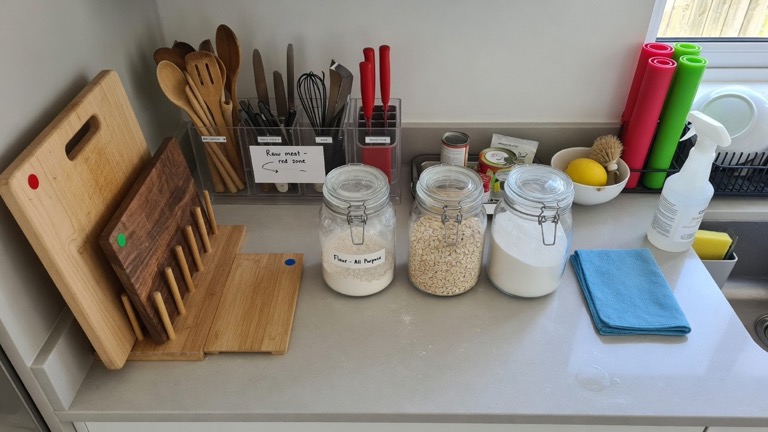
A Specific Prep Spot: If possible, designate a specific section of your counter as the “GF Prep Zone.” This might be a corner, or even a pull-out cutting board. Make it clear this area is for GF food only. Before you even start, wipe it down thoroughly with a clean cloth and warm, soapy water. Always assume there’s gluten, even if you can’t see it.
-
Dedicated Cutting Boards: This is non-negotiable. You absolutely need your own Utensils & Cutting Boards. Gluten can embed itself in the scratches of cutting boards, becoming a permanent resident. Use a distinct color (like bright green or blue) for your GF board to make it instantly recognizable. Keep it stored separately, perhaps in a dedicated drawer or upright in a special spot.
-
Clean as You Go: Practice meticulous cleanup. After preparing gluten-free food, wipe down your designated area immediately. This prevents any accidental cross-contact later. It’s like sweeping up after a glitter bomb, but for crumbs.
Zone 3: Cooking Surfaces – Heat Up Safely
Stovetops and ovens can be tricky. Crumbs can fall. Baked-on residue can be a problem. But with a few tweaks, you can make them safe.
Your Strategy: Protection and Prioritization
-
Stovetop Smarts: If you’re using a shared stovetop, ensure it’s thoroughly cleaned before placing your GF pan down. For extra caution, consider using the back burners exclusively for your GF cooking. This gives you a little more distance from any gluten action on the front burners. Use your own dedicated GF pots and pans (we’ll get to those in a moment).
-
Oven Protection: When baking GF items in a shared oven, always use a dedicated baking sheet lined with parchment paper or foil. This creates a barrier between your food and any potential gluten residue on the oven racks. For casseroles or dishes, simply place your GF dish on your dedicated baking sheet. It’s a simple step that offers great protection.
Zone 4: Shared Appliances – Toaster, Air Fryer, and More
These are notorious gluten magnets. Think about it: crumbs, crumbs, everywhere! But don’t worry, you don’t have to forgo toast or crispy fries.
Your Strategy: Personal Barriers or Personal Appliances
-
Toasters: This is probably the biggest offender. A shared toaster is a no-go unless you use toaster bags. These reusable, non-stick bags keep your bread completely separate from any lingering gluten crumbs. Pop your GF bread in, slide the bag into the shared toaster, and enjoy perfectly safe toast. Another option, if space allows, is a small, dedicated “GF Only” toaster. It’s a game-changer for toast lovers. Read more about Toaster & Air Fryer Safety: Keeping Shared Appliances Gluten-Free for detailed tips.
-
Air Fryers: Similar to toasters, air fryers can accumulate crumbs. For shared air fryers, use parchment paper liners or a dedicated, washable silicone basket liner specifically for your GF foods. If you use it frequently, a separate small air fryer for GF foods can be a worthwhile investment.
-
Microwaves: While less risky, crumbs can still cling to microwave plates. Always cover your GF food when microwaving to prevent splatters and potential cross-contamination. Give the microwave interior a quick wipe-down before and after, especially if it looks messy.
Zone 5: Utensils, Cookware, and Cleaning Supplies – Your Kitchen Arsenal
Your tools are just as important as your ingredients. Gluten can cling to porous surfaces and scratched metals. This is where truly dedicated items shine.
Your Strategy: Color-Coding and Separation
-
Dedicated Cookware: Ideally, have a few dedicated GF pots, pans, and baking sheets. Pans, especially non-stick ones, can get scratched over time, and gluten can hide in those tiny crevices. Designate specific items that are “GF Only.” If new cookware isn’t immediately feasible, ensure shared pots and pans are meticulously cleaned before you use them. We are talking serious scrubbing. Stainless steel and cast iron can usually be cleaned very thoroughly. Non-stick, with scratches? That’s a tougher call.
-
Utensils are Key: Wooden spoons are porous and can absorb gluten. Plastic spatulas can get scratched. Metal utensils are generally easier to clean, but still, dedicated ones are best. Again, color-coding can be your friend! Brightly colored GF spatulas, tongs, and whisks stand out. Store them in their own separate drawer or container. Again, check out our guide on Utensils & Cutting Boards: Preventing Cross-Contamination in the Kitchen for the full scoop.
-
New Cleaning Supplies: This is a sneaky one! A sponge used to wipe down a countertop after making a gluten-filled sandwich is now contaminated. Same for dishcloths. Invest in a separate, clearly marked GF sponge, dish brush, and dishcloth. Store them away from the “regular” ones. Better yet, use new sponges often or run dishcloths through a hot wash cycle after any gluten exposure.
The Secret Ingredient: Communication!
Listen, all these physical zones and dedicated items are fantastic, but they work best with open, honest communication. Talk to your housemates, family, or anyone sharing your kitchen. Explain why these zones are important for your health, not just a picky preference. Share this post with them! Education is much more effective than accusation. Most people want to be helpful; they just need to understand the specifics. Make it clear, make it simple, and make it about safety for you.
You can even make a simple list or diagram of your GF zones and post it in the kitchen. A visual reminder can go a long way. This isn’t about creating conflict; it’s about building understanding and mutual respect in a shared space.
Beyond the Kitchen: A Quick Thought on Gluten-Free Living
While we’re focusing on the kitchen, remember that cross-contamination can pop up in unexpected places. Think about things like hand soaps near the kitchen sink. Some personal care products might contain gluten, and residue on your hands could transfer to food. It’s a broader topic, but something to keep in mind as you become a true GF safety expert. If you’re curious to know more, we have a helpful guide on Preventing Gluten Contamination in Personal Care Products & Cosmetics.
Bringing It All Together: Your Confident GF Kitchen
Creating dedicated gluten-free zones isn’t about being overly cautious; it’s about being brilliantly proactive. It’s about taking control of your environment, so you can truly enjoy your food without a shadow of doubt. You’re building a system that protects your health and elevates your culinary experience. Imagine the freedom! No more second-guessing. Just pure, unadulterated, delicious gluten-free joy.
By implementing these zones – from your pantry to your prep space, your cooking surfaces to your cleaning supplies – you’re crafting a haven. It’s a space where your GF meals can truly shine, safe from unwelcome gluten guests. This isn’t a limitation; it’s an expansion of your culinary possibilities. So go forth, create your zones, and cook with confidence!
For more in-depth information on keeping your kitchen safe, consider checking out resources from reputable organizations like the Celiac Disease Foundation or even the FDA’s guidance on gluten-free labeling. Knowledge is power, and safety is delicious!
Happy cooking, my GF friends!
Remember, your health and peace of mind are worth every bit of this effort. Now, go enjoy that safe, delicious meal you just prepared!