
GF Guide
Gluten-Free Baking Essentials (2026)

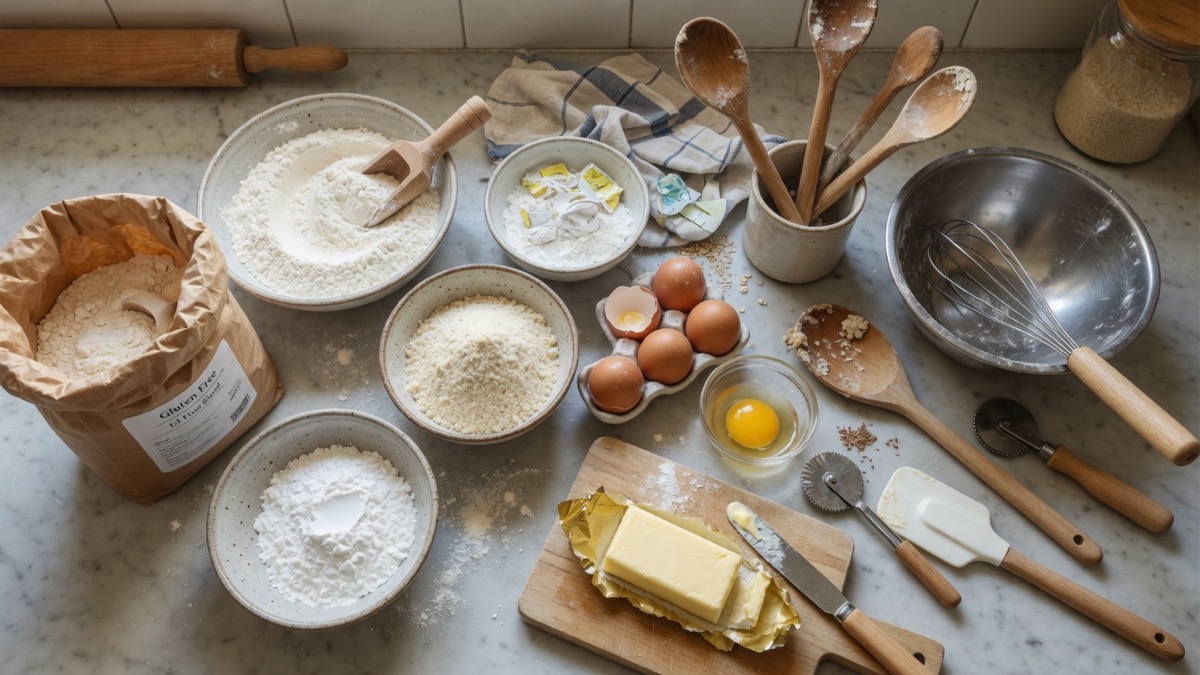
Ever gazed longingly at a bakery window, convinced that golden-crusted sourdough and flaky croissants were forever out of reach? Friend, I’m here to tell you that’s just not true. Gluten-free baking isn’t some mystical art reserved for culinary wizards. It’s a delicious adventure, a chance to rediscover the simple joy of a warm cookie or a perfectly risen loaf, right in your own kitchen.
Think of me as your co-pilot on this tasty journey. We’re going to set you up for success. We’ll talk about the must-have tools and the essential ingredients that will turn your kitchen into a GF bakery wonderland. No more sad, crumbly experiments. Only pure, unadulterated baking bliss. If you’re still getting to grips with what gluten actually is, and why some of us need to avoid it, take a moment to read our guide on Understanding Gluten-Free first. It lays a fantastic foundation.
GF Baking: Why It’s Different (and Totally Doable)
Okay, let’s get real for a sec. Gluten, that stretchy protein found in wheat, barley, and rye, is like the sticky glue in traditional baking. It gives structure. It provides elasticity. It traps air bubbles, making bread rise light and fluffy. Without it, things can get a bit… well, flat and crumbly. That’s why you can’t just swap regular flour for a GF blend cup-for-cup in every old recipe. It just won’t work right.
But here’s the good news: science, creativity, and a little bit of know-how have given us amazing substitutes. We now have clever flour blends and natural binders that mimic gluten’s superpowers. It’s all about understanding these new players and giving them the right supporting cast. And trust me, the results are often even more delicious, with incredible textures and flavors you might not expect.
Your Kitchen’s GF Toolkit: Essential Gadgets
You don’t need a professional kitchen, but a few key tools make all the difference. Think of these as your trusty sidekicks.
A Digital Kitchen Scale: Your New Best Friend
Seriously, if you buy one thing, make it this. GF baking is a science, and precision matters. Measuring flour by volume (cups) can vary wildly. A cup of packed flour is very different from a cup of sifted flour. A scale, on the other hand, measures by weight (grams or ounces). This ensures you add the exact amount of flour every single time. Consistent results? Yes, please! It makes GF flour blends behave much better. This is probably the number one secret to consistent baking.
Stand Mixer or Hand Mixer: Your Arm Saver
While some GF recipes are fine with just a whisk, a good mixer really helps. It blends ingredients thoroughly, develops batters, and can aerate mixtures like egg whites beautifully. A stand mixer is a workhorse, freeing up your hands, but a good hand mixer does the job just fine for most home baking.
Reliable Baking Pans and Sheets
- Metal Baking Pans: These conduct heat efficiently, leading to even browning. Think cookie sheets, loaf pans, and muffin tins. Heavy-gauge aluminum is usually a good bet.
- Glass Baking Dishes: These retain heat longer, which can be great for casseroles but sometimes tricky for delicate baked goods. If a recipe calls for glass, stick to it.
- Parchment Paper: Non-negotiable! It prevents sticking, makes cleanup a breeze, and helps delicate GF baked goods slide right off the pan without breaking. Always have a roll handy.
The Little Things That Count
Don’t overlook these kitchen heroes:
- Good Quality Measuring Cups and Spoons: Even with a scale, you’ll need these for liquids and small amounts of ingredients like leavening agents. Make sure they’re accurate.
- Rubber Spatulas: Great for scraping bowls clean, folding in ingredients gently, and spreading batters. Get a few.
- Whisks: For aerating dry ingredients, mixing liquids, and creating light, airy batters.
- Oven Thermometer: Your oven’s internal thermometer can be wildly inaccurate. A small, inexpensive oven thermometer will tell you the true temperature, preventing burnt bottoms or underbaked centers. This is a game-changer for consistency.
The GF Pantry: Your Ingredient Arsenal
Now for the fun part: stocking your pantry with the magic that makes GF baking sing. Think of these as your building blocks.
GF Flour Blends: The Foundation
This is where most of the magic happens. A good GF flour blend is designed to replace wheat flour. Many reputable brands offer excellent all-purpose GF blends that combine different flours and starches to give a balanced result. Look for ones that list a variety of ingredients, not just rice flour.
- Store-Bought Blends: These are convenient and often well-formulated. They usually contain a mix of rice flour, tapioca starch, potato starch, and sometimes a gum like xanthan. My advice? Start with a trusted brand.
- DIY Blends: Feeling adventurous? You can make your own! This gives you ultimate control over flavor and texture. A common base might be brown rice flour, white rice flour, tapioca starch, and potato starch, plus a binder.
Individual GF Flours & Starches: For Specific Textures
While a blend is great, sometimes individual flours shine. You don’t need all of these right away, but they’re fun to experiment with.
- White Rice Flour & Brown Rice Flour: Basic workhorses. Brown rice flour adds more whole-grain flavor and nutrition.
- Tapioca Starch (or Tapioca Flour): Gives chewiness and crispness. Think gooey cookies or crispy crusts.
- Potato Starch (not potato flour): Adds lightness and softness. Great for cakes and muffins.
- Cornstarch: A common thickener, also contributes to a tender crumb.
- Almond Flour: Adds moisture, richness, and a lovely nutty flavor. Great for cakes and cookies.
- Oat Flour (Certified GF): Adds a soft texture and a hearty, wholesome flavor. Be sure it’s certified GF to avoid cross-contamination, especially if you have celiac disease. Want to know more about cross-contamination? Check out our article on What Exactly Is Gluten and Why Is It Harmful to Some?.
- Sorghum Flour: A mild, slightly sweet, and earthy flour that’s excellent in many baked goods.
The Binders: Mimicking Gluten’s Stretch
These are crucial. Since gluten isn’t there to hold things together, these ingredients step in to provide structure and elasticity.
- Xanthan Gum: This is the superstar. A tiny bit goes a long way. It’s a natural polysaccharide (a type of carbohydrate) that helps trap air, prevent crumbling, and give your baked goods that lovely, elastic texture. You’ll add it to many GF recipes, often in very small amounts (like ¼ to 1 teaspoon).
- Guar Gum: Another natural gum, similar to xanthan, often used interchangeably or in combination. It also helps with binding and structure.
Leavening Agents: The Rise & Shine Crew
These are responsible for lift!
- Baking Soda: Needs an acid (like buttermilk, lemon juice, or vinegar) to react and produce carbon dioxide bubbles.
- Baking Powder: A complete leavener, containing both acid and base, activated by liquid and heat. Always check expiration dates! Old leaveners mean flat bakes.
Fats: For Moisture, Flavor, & Texture
Fats are critical for moisture, richness, and achieving that tender crumb.
- Butter: Flavor king! Adds richness and helps with flakiness.
- Vegetable Oils: Neutral in flavor, great for moist cakes and quick breads. Canola, sunflower, or avocado oil work well.
- Shortening: Creates very tender and flaky results, often used in pie crusts or certain cookies.
Sweeteners, Liquids, and Other Flavor Boosters
These are pretty standard, but worth mentioning.
- Sugars: Granulated, brown, powdered sugar. They add sweetness, moisture, and aid in browning.
- Maple Syrup & Honey: Natural sweeteners that add distinct flavors and moisture.
- Eggs: Act as a binder, leavener, and add moisture and richness.
- Milk (Dairy or Non-Dairy): Provides liquid for hydration. Almond milk, soy milk, or regular dairy milk all work.
- Vanilla Extract: The universal flavor enhancer. Good quality vanilla makes a difference.
- Salt: Balances sweetness and enhances all other flavors. Don’t skip it!
A note on different kinds of gluten issues: if you have The Difference Between Celiac Disease and Gluten Sensitivity, being very careful about certified GF ingredients is absolutely non-negotiable. For those with a sensitivity, the threshold might be different, but clean ingredients are still key.
Top Tips for GF Baking Success
Ready to put these essentials to work? Here are a few golden rules to keep in mind:
- Measure by Weight (Seriously!): I know I said it, but it bears repeating. Use that digital scale, especially for flours.
- Don’t Overmix: Unlike wheat doughs where you develop gluten, overmixing GF batters can make them tough. Mix until just combined.
- Let Batters & Doughs Rest: This gives the flours time to hydrate, leading to a better texture. 15-30 minutes can make a world of difference.
- Adjust Hydration: GF flours absorb liquid differently. Your batter might look a little thinner or thicker than a traditional one. Trust the recipe, but also trust your gut. Sometimes a tablespoon or two more liquid or flour makes it perfect.
- Embrace Your Oven: Hot spots are real. Rotate your pans halfway through baking. And always, always use that oven thermometer! According to the USDA Food Safety and Inspection Service, knowing your oven’s true temperature is crucial for safe and successful baking.
- Don’t Be Afraid to Experiment (Once You Master the Basics): Start with reliable GF recipes. Once you get a feel for how these ingredients behave, then you can start tweaking and playing.
The Sweet Reward
Stepping into the world of gluten-free baking is truly rewarding. It means no more missing out on your favorite treats. It means the smell of freshly baked bread filling your home. It means sharing delicious, safe food with friends and family, and seeing their faces light up.
With these tools and ingredients, you’re not just making gluten-free food, you’re crafting joy. You’re building confidence. So grab your scale, stock your pantry, and let’s get baking! The abundance of delicious possibilities is waiting. For more on navigating your GF journey, remember our comprehensive guide, Understanding Gluten-Free, is always there to help.
Need more baking inspiration? Check out how other baking traditions incorporate diverse flours. For example, traditional flatbreads from various cultures often use non-wheat flours, offering a delicious global perspective on GF baking principles, as explored by sources like Wikipedia’s entry on Flatbread.