Educating Family & Friends About Gluten Cross-Contamination (2026)

Picture this: you’re gathered around a big table. Laughter fills the air. Plates are passed, stories are shared. This is what food is all about, right? Connection. Joy. But if you’re eating gluten-free, especially for health reasons like celiac disease or a severe sensitivity, these beautiful moments can sometimes come with a hidden layer of stress. That stress often boils down to one tricky thing: cross-contamination.
I get it. Explaining something so invisible, yet so impactful, can feel like you’re speaking a different language. Your family and friends love you. They want you to be safe and happy. Mostly. But understanding the finer points of keeping your GF food safe? That’s a whole different ballgame. It’s not about being difficult or demanding. It’s about health, plain and simple. Think of me as your personal coach in this mission. We’ll turn confusion into clarity, and maybe even a little culinary adventure.
Before we dive into those tricky conversations, let’s remind ourselves: preventing gluten cross-contamination is a cornerstone of living safely GF. For a deeper look into the nitty-gritty of keeping your kitchen safe, check out our guide on Preventing Gluten Cross-Contamination.
What Even IS Cross-Contamination, Really?
This is where our expert friend voice comes in handy. It’s not about germs, which is often the first thought for people. It’s about a tiny particle. An invisible menace. Think of gluten like glitter. You know how glitter gets everywhere? You use it on one project, and suddenly it’s on your face, your clothes, the cat. Even after you clean, a little shimmer always seems to hang around.
Gluten, for us GF folks, is exactly like that. A tiny crumb, a microscopic bit of flour, a drop of sauce that touched a wheat noodle – it’s all enough. For someone with celiac disease, even 20 parts per million (ppm) can cause damage to their small intestine. That’s a ridiculously small amount, like a single grain of sand in a five-gallon bucket. For those with sensitivities, the reaction might be different, but it’s still unpleasant, to say the least. So, it’s not about making a fuss. It’s about protecting your internal systems from that pesky glitter.
Why Is This Conversation So Important?
It boils down to well-being. When we explain cross-contamination, we’re not just sharing information. We’re asking for understanding and support for our health. Living GF isn’t a fad diet for many of us. It’s a medical necessity. And when we’re glutened, the consequences can range from uncomfortable (hello, bloat and brain fog!) to severely painful and long-lasting. Nobody wants to feel like that, especially not after a lovely meal with loved ones.
When you take the time to explain it, you’re not just protecting yourself. You’re giving your family and friends the tools to truly care for you. You’re inviting them into your world, helping them feel confident in providing a safe meal. That’s a win-win.
Starting the Conversation: Gentle & Clear
Approach these chats from a place of love and education, not accusation. Remember, most people genuinely want to help, they just don’t know how. Start early, ideally before a meal or gathering is even planned. A quick text or call works wonders.
Pre-Meal Prep Talk
When someone offers to cook, or you’re planning a potluck, this is your golden opportunity. Say something like this:
“Hey, I’m so excited for dinner! Just a quick heads-up about my gluten-free needs. It’s not just about avoiding bread; it’s also about tiny crumbs. Imagine gluten like glitter. It gets everywhere! So, if you’re making something for me, a clean cutting board, fresh utensils, and separate serving spoons really make a difference. No worries if it feels like a lot, I’m happy to bring a dish or help out in the kitchen!”
This approach is open, non-confrontational, and immediately offers solutions. It sets expectations without putting anyone on the spot.
The Kitchen Tour: Show, Don’t Just Tell
Sometimes, seeing is believing. If you’re at their home, or they’re at yours, a quick visual tour can be super helpful. “See this toaster? It’s a gluten magnet because of all the crumbs.” Explain why shared appliances like toasters and air fryers are often no-go zones for GF items. We even have a dedicated guide for that, so send them our way: Toaster & Air Fryer Safety: Keeping Shared Appliances Gluten-Free.
Point out things like:
- Cutting boards: A porous wooden cutting board that’s regularly seen gluten-filled bread is a big risk.
- Colanders: If it’s drained wheat pasta, it’s probably got gluten residue.
- Spatulas & Spoons: Using the same spoon for a wheat-based casserole and then stirring your GF soup? Nope!
- Shared Condiments: Butter tubs where gluten-y knives have double-dipped. Jams. Peanut butter. These are common culprits.
You can even make it fun: “Think of it as a gluten obstacle course! We just need to make sure my food makes it to the finish line without touching anything gluten-y.”
Specific Scenarios & Solutions
Buffets & Potlucks
These can be tricky. Explain that even a serving spoon accidentally swapped between dishes can cause contamination. If you’re providing a GF dish, place it first in the line, or designate a separate GF-only area. Label your dish clearly: “Gluten-Free, Made with Care!”
The “Safe Zone” in Shared Spaces
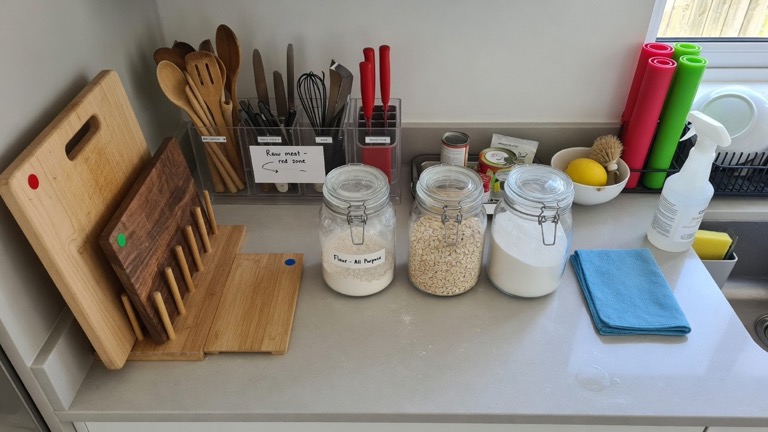
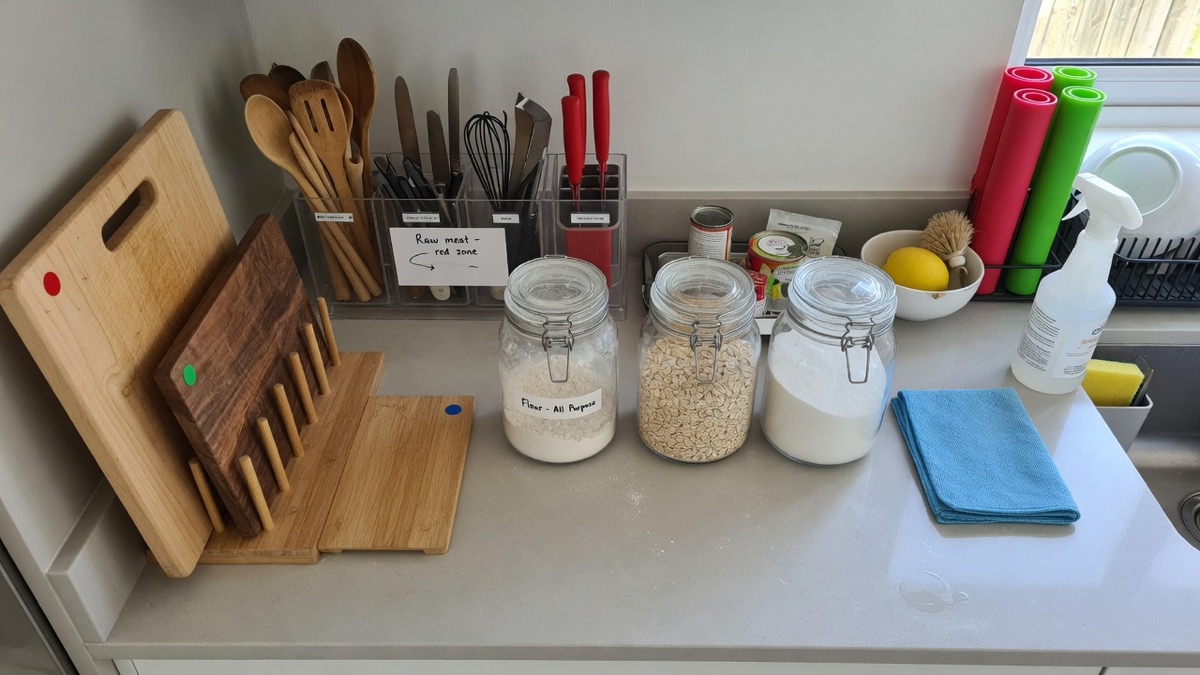
If you’re often cooking together, creating a “safe zone” in the kitchen can be helpful. This might mean having designated GF pots, pans, and utensils. For more on this, our guide on Setting Up a Gluten-Free Kitchen: A Beginner’s Guide offers tons of practical tips that your loved ones might find really useful, too.
A designated shelf in the pantry, specific colored handles for your GF cooking tools, or even a different toaster (a small, inexpensive one for GF bread only!) are simple, visual cues that help everyone remember. Consistency is key here. If they see you consistently using your GF-only cutting board, they’ll pick up on the habit.
Beyond the Kitchen: Reading Labels
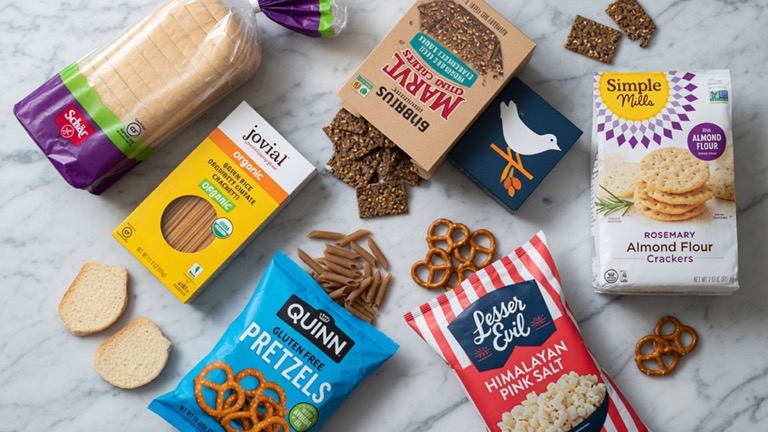
Sometimes, family members might try to buy GF products for you. This is incredibly thoughtful! But remember to explain that “gluten-free” isn’t always as simple as it sounds. Point out the certified GF label, and mention that certain ingredients, even if naturally GF, might be processed on shared lines. For the really dedicated, you could even point them to our guide on Reading Labels Beyond ‘Gluten-Free’: Hidden Contaminants to Watch For. It’s all about making sure they have the right tools, so their efforts are genuinely helpful.
Handling Misunderstandings & Pushback
Sometimes, despite your best efforts, you might encounter skepticism. “Is it *really* that serious?” or “A tiny crumb won’t hurt, will it?” Remain calm. Reiterate that it’s a medical necessity for you. You are protecting your health. You have the right to eat safely.
You can say:
- “For me, even a little bit of gluten causes symptoms that can last for days. I really appreciate you helping me avoid that.”
- “It’s like a severe allergy. While it might not be life-threatening in the same immediate way, it causes internal damage and makes me really sick.”
Consider sharing reliable resources. A quick search for information from reputable sources can sometimes speak volumes. For instance, the Celiac Disease Foundation offers clear guidelines. The National Institute of Diabetes and Digestive and Kidney Diseases also has helpful information about celiac disease and its management. You can share articles like this one from NIDDK on Eating, Diet, and Nutrition for Celiac Disease, or even this comprehensive overview from Wikipedia on Coeliac Disease, which details the importance of avoiding cross-contamination.
And remember, it’s okay to set boundaries. If someone consistently struggles to understand or respect your needs, it’s okay to politely decline shared meals or offer to bring your own food. Your health comes first.
The Delicious Side of Education
Focus on the positive! Bring amazing GF dishes to share. Show them how incredibly delicious gluten-free can be. Bake GF cookies, whip up a GF pasta dish everyone can enjoy, or grill some naturally GF meats and veggies. When they taste how good it is, the “limitations” fade into the background. They’ll start seeing abundance, not restriction. It’s about celebrating incredible food, safely.
In the end, educating family and friends about gluten cross-contamination is an act of self-care. It’s about making those cherished meal times truly joyful for everyone, including you. It takes patience, clear communication, and a dollop of that trusted friend vibe. You’ve got this. And soon, everyone around you will be a confident, joyful participant in your delicious, gluten-free life.